

Which Lens Specifications Matter Most in Visible-Light Camera Modules?

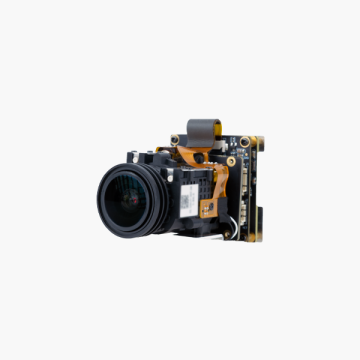
When selecting a visible-light camera module, the lens is often the component that determines whether the system can deliver reliable, high-clarity imaging in real deployments. Although many specifications influence performance, several lens parameters consistently stand out as the most critical for long-range monitoring, all-day surveillance, and high-precision observation tasks.
Focal length and optical zoom remain the foundation of long-distance imaging. A longer focal length provides higher magnification and a tighter field of view, enabling operators to identify small details—such as license plates, human outlines, or vessel structures—at extended ranges. Camera modules used in border surveillance, maritime monitoring, and high-altitude platforms rely heavily on this capability, making telephoto performance one of the most scrutinized metrics during product evaluation.
Aperture size plays an equally important role. A lower F-number improves light intake, resulting in brighter images, reduced noise, and clearer details in low-illumination conditions. In scenarios where lighting changes rapidly—such as dusk transitions, forest shading, or urban night scenes—a well-designed low-light lens can significantly outperform standard optics and maintain stable visibility without relying heavily on electronic gain.
Sensor resolution further influences lens selection. As pixel density increases, the lens must maintain image sharpness across the entire zoom range, especially at the telephoto end where optical challenges are more demanding. A mismatched lens-sensor combination often leads to soft images or loss of fine detail, which is why high-resolution camera modules require correspondingly high-precision optical designs.
Focusing behavior is also a decisive factor. Long-range systems depend on rapid, stable autofocus to keep moving targets clear. Smooth focus tracking during zooming is essential for PTZ applications, anti-UAV monitoring, traffic enforcement, and industrial inspection. Any delay or hunting during focusing directly impacts usability, especially under vibration, heat fluctuations, or fast zoom operations.
In practical deployments, users often compare these lens specifications before choosing a visible-light camera module, because together they define real-world performance: the ability to see farther, capture more detail, and maintain clarity across changing environments. For system integrators and solution providers, understanding these key lens parameters is essential for selecting the right camera module and building reliable, high-quality imaging platforms.